
Disposables on the tables, or one shared disposable?
One disposable camera per table is the tradition. WeWere is a shared disposable camera: the same idea, on every guest’s phone. Here is what changes, by the numbers — including what the physical disposable camera still does better.
Only the host needs the app, on iPhone. Your guests have nothing to install.
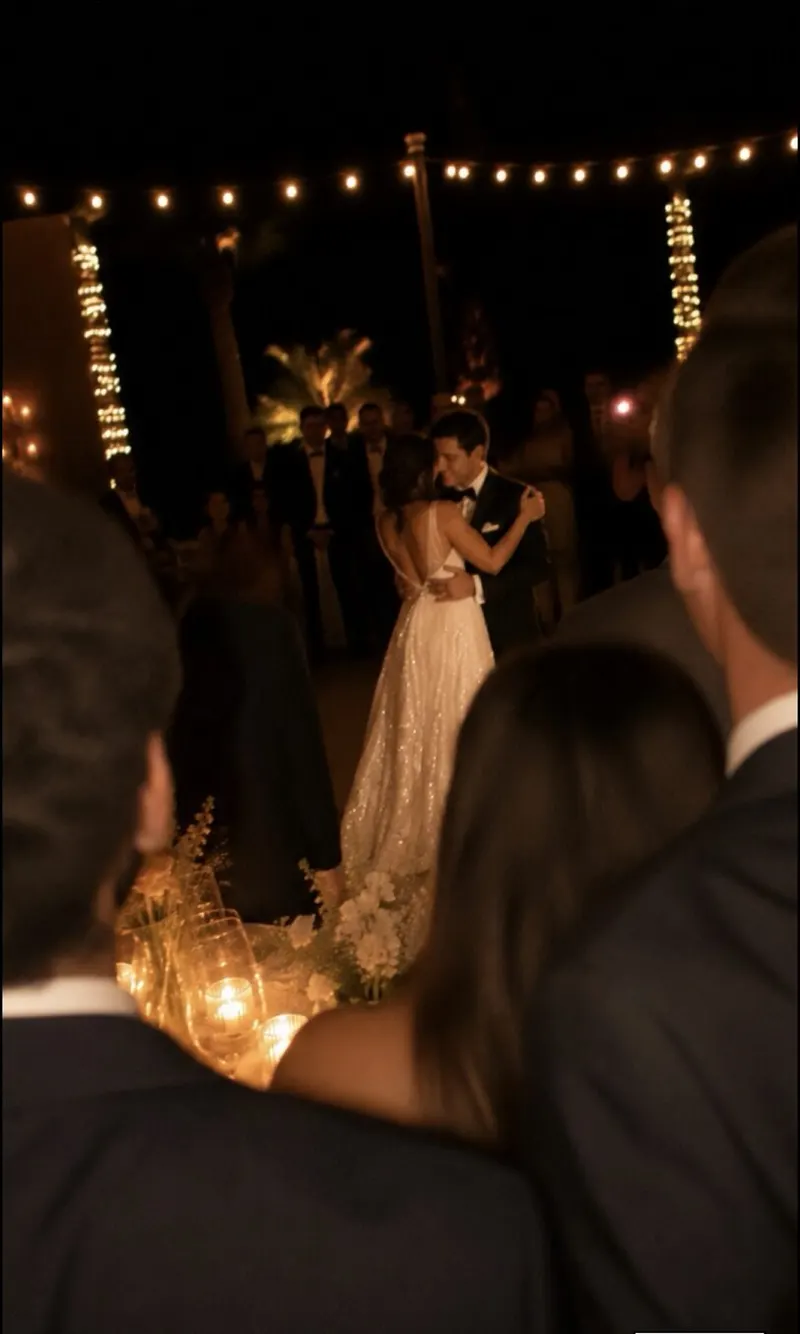
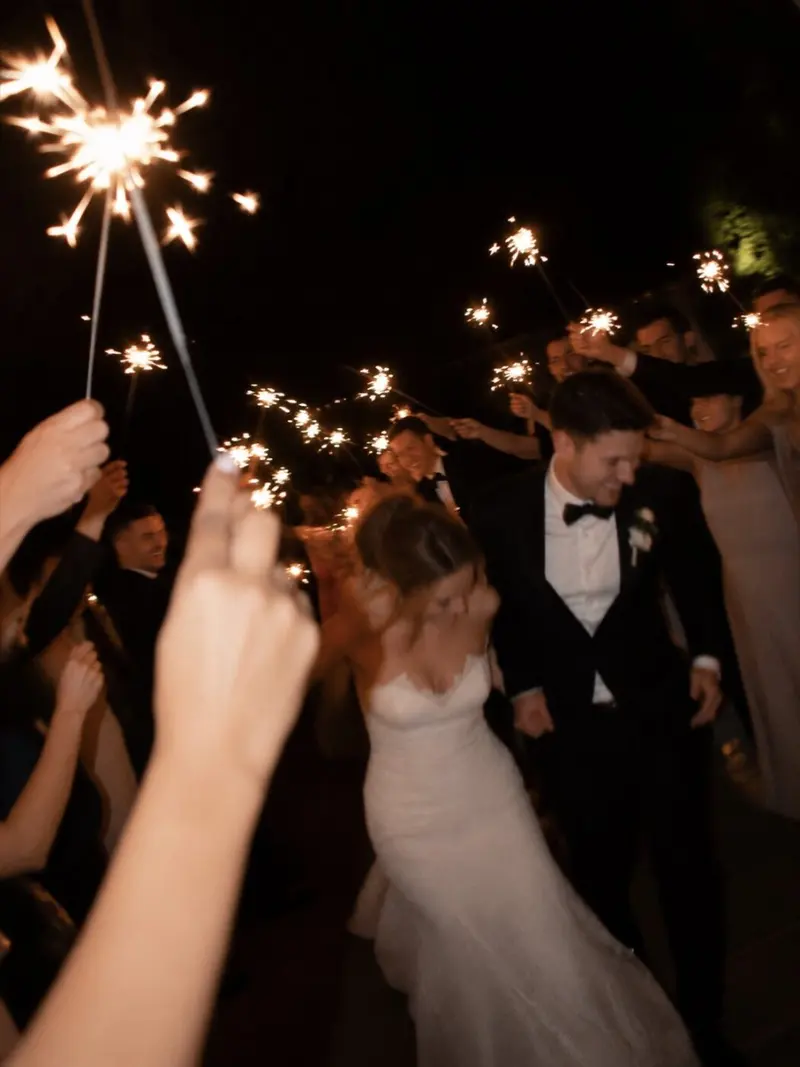
Disposable camera vs WeWere: side by side
The numbers for physical disposables are typical ballpark figures from stores and labs. The WeWere numbers describe the product as it actually is.
| Criterion | Physical disposables | WeWere |
|---|---|---|
| Price for 10 tables | 10 cameras at $15–20 each: $150 to $200, plus $15 per camera for developing, so $300 to $350 in all. | $14.99 for 1,000 photos, the tier for a wedding of 100 to 150 guests; $29.99 for 2,500. Unlimited guests, one payment, nothing to develop. |
| Number of photos | 27 exposures per camera: 270 photos for the whole room. | 1,000 photos for a wedding, shared by all the guests, and up to 2,500 on the largest. The host can add more from the app. |
| Time before you see them | About 3 weeks: collect the cameras, drop them off, develop, scan. | Live throughout the night, or at the reveal time you picked. |
| Who sees what | You get everything. Guests see nothing, unless you share afterward. | Every member of the event sees the album. Nobody else. The host can delete a photo or remove a guest. |
| Quality and grain | Real film grain, harsh flash. Many black or blurry frames indoors, and you only find out once they’re developed. | The phone’s sensor, full resolution. In the app, 5 film stocks (Original, 35mm, Black & White, Polaroid, 90s) with the orange date stamp. |
| Live wall | Not possible. | Included starting with the 300-photo tier: one link to open on the venue screen. |
| What’s left afterward | Paper prints and, if you ask for them, scans. The cameras go in the trash. | An online album for 45 days, free full-resolution downloads. The Wrapped and the recap film in the app. One year online as an option. |
| Waste | 10 single-use plastic bodies, their batteries, the developing chemicals. | Nothing physical. Deleted files are erased within 30 days. |
What the physical disposable camera still does better
No point pretending: the disposable has qualities WeWere will never have.
- The object — a camera you hold, pass to your neighbor, leave lying on the tablecloth. It’s part of the decor.
- The nostalgia — the mechanical click, the flash, a grain that isn’t a filter. For a retro-themed wedding, the object itself is the point.
- No signal needed — a barn with no cell service, a beach, a cellar: the disposable doesn’t care. WeWere needs a connection to upload the photos.
- No phone in hand — some couples want a screen-free evening. A disposable respects that rule; an app doesn’t.
- The full surprise — three weeks of waiting, an envelope of prints, the moment you open it. WeWere offers a reveal at a chosen time, but it’s not the same wait.
What WeWere does better
- Volume — 1,000 photos for the room instead of 270, and a camera in every guest’s hand rather than one per table. The difference is the 1 a.m. photos, long after the rolls are empty.
- Price — for a wedding of 100 guests, $14.99 once for 1,000 photos, versus $300 to $350 for 10 disposables and their 270 exposures, developing included.
- Live — photos arrive throughout the night, on the venue’s live wall if you turn it on from the app. That’s what gets the back table shooting.
- Participation — guests scan a QR code and sign in with the Apple or Google account they already have. Nothing to install, on iPhone and on Android.
- Control — you see everything and delete what needs deleting. With a disposable, you find out what table 7 was up to when the prints come back.
- Afterward — everyone downloads their photos for free for 45 days. The next-morning Wrapped and the recap film are in the app.
Who each one is for
Physical disposables, if: you have a deliberately phone-free wedding, a venue with no signal, a decor budget where the object matters, fewer than 5 tables.
WeWere, if: you have more than 50 guests, you want to see the photos the same night, there’s a screen in the room, and far-flung guests each want their own photos.
Both, if: you want the object on the tables and the volume. Two or three disposables for the mood, WeWere for the rest. Our guide to disposable cameras at weddings explains how to combine them.
For a wedding, in practice
For a wedding of 100 to 150 guests, WeWere is $14.99 for 1,000 photos: one payment, no subscription, unlimited guests. For a big wedding, 2,500 photos for $29.99. See pricing. The wedding page covers the setup, table by table.
Frequently asked questions
Can you keep the disposable grain with WeWere?
In the app, yes. The host picks the event’s film stock: 35mm, Black & White, Polaroid or 90s, with the orange date stamp in the corner like a real disposable. Every photo taken in the app gets that film stock.
What if the venue has no signal?
Guests need 4G or Wi-Fi to upload their photos. A photo taken with no signal is saved and sends itself as soon as the connection is back — just keep the page open. If the venue has poor coverage, put the Wi-Fi details on the table card. If there’s no signal at all, the physical disposable is still the right answer.
What do 10 disposables really cost?
Figure $15 to $20 per camera, so $150 to $200 for 10 tables, plus $15 per camera for developing: $300 to $350 in all. For 270 photos, some of them black or blurry.
Can you do both?
Yes, and it’s often the right compromise: two or three disposables for the object and the mood, WeWere so that everyone joins in and sees the photos the same night.
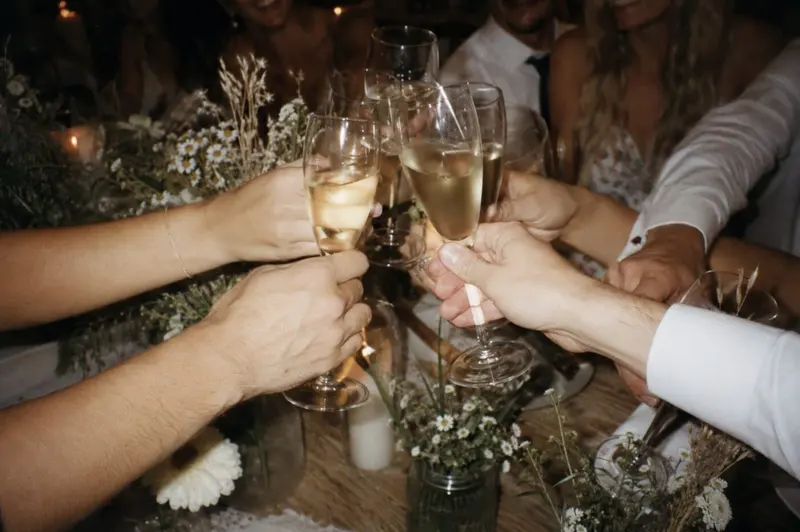
The disposable camera, shared.
Create the event in the app, print one card per table. Your guests do the rest, without installing anything.
Download on theApp StoreUnlimited guests. Free up to 40 photos